

The future of smart glasses is shifting from niche gadgets to a multi-billion dollar market, with projections suggesting they could eventually replace the smartphone as our primary mobile device. The global market is projected to grow from $8.2 billion to $15.8 billion by 2030.
Smart glasses are no longer just a sci-fi idea or a gadget for tech lovers. They are slowly becoming one of the most important interfaces of the next decade. They combine AI, augmented reality, and everyday glasses into something that feels natural, useful, and always there.
So what is the future of this technology? Let’s see what the future of smart glasses will really be like.
From Alerts to Smart AI Friends
At first, smart glasses were only useful for basic tasks like sending notifications, taking pictures, and making simple voice commands. The next generation is a huge step forward.
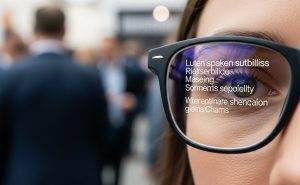

Smart glasses that come out in the future will be AI assistants that know what’s going on around them. They’ll know what you’re looking at, where you are, and what you’re doing, and then they’ll offer to help without you having to ask. Think about:
- Subtitles that translate in real time in front of you
- Quick explanations of things, places, or text you see
- Navigation cues that float naturally in your line of sight
- Instead of pulling out your phone, you can listen to summaries.
As on-device AI gets better, a lot of this processing will happen on the device itself, which will make interactions faster and more private.
Smart glasses won’t just show you things; they’ll also help you understand the world.
Augmented Reality and Spatial Computing Are the Main Events
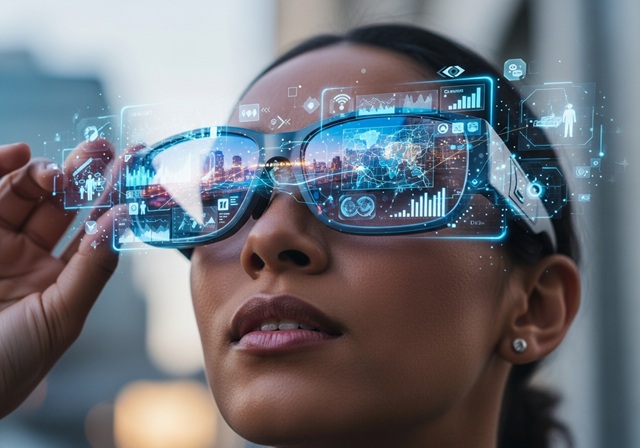
Augmented reality (AR) is what really makes smart glasses special. Digital information will be in the real world around you instead of on flat screens. This is often called “spatial computing,” which is when digital content changes based on what’s going on around you.


Some things that could happen in the future with AR are:
- Directions that are based on real streets and buildings
- Labels that float above tools, machines, or products
- Virtual objects that more than one person can see at the same time
- Gestures or voice control interactive holograms
This change takes us away from phone-based interaction and toward a more natural way of using a computer without using our hands.
Design Matters: Glasses You Will Want to Wear
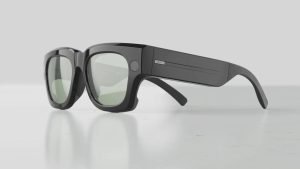
Smart glasses need to stop looking like gadgets if they want to become popular. That’s already going on.
New designs focus on:
- Frames that are light and feel like regular glasses
- Displays that are hidden or subtle, not prominent.
- Fashionable styles through partnerships with eyewear brands
- Better battery life and heat management
Smart glasses in the future won’t look like something from the future; they’ll fit right in with everyday life.
Where Smart Glasses Are Already a Hit: Work and Business
Smart glasses are already showing their worth in professional settings, even though more and more people are starting to use them.
People are using them for:
- Manufacturing and logistics, with instructions that are easy to follow
- Remote help, where experts can see what workers see and help them
- Healthcare and medical training, putting data and procedures on top of each other
- Service in the field, inspections, and upkeep
In these situations, being able to access information without using your hands saves time, cuts down on mistakes, and makes things safer. This makes smart glasses a useful tool, not just a novelty.
Growth and momentum in the market

Smart glasses are following the same pattern as smartphones and smartwatches:
Stage 1: Early excitement
Stage 2: First generations were slow and awkward.
Stage 3: Quick progress once the design, price, and usefulness are in line
Adoption is speeding up as AI gets better and hardware gets smaller. Prices are going down, ecosystems are forming, and more developers are making experiences that are only for glasses, not phones.
In the next few years, we’ll find out if smart glasses are just nice to have or must-have items.
The Problems Still Ahead
Even though a lot has been done, there are still some problems.For smart glasses to go mainstream, manufacturers must overcome several hurdles:
Battery life: Small frames limit how much power they can hold. With heavy AR features, current high-performance models frequently only last 1-4 hours; new silicon-carbon battery technology aims for a “full day” of use.
Concerns about privacy: cameras and sensors raise moral and social questions. Questions remain regarding discreet recording in public spaces.
Style vs. Substance: Balancing powerful processors and batteries while keeping frames under 35 grams for all-day comfort.
Software ecosystems: Apps that are intriguing enough to use every day
Fixing these problems will be just as important as making displays or processors better.
A Look at the Future
Smart glasses won’t replace smartphones right away in the future. It’s about changing the way we use information.
Instead of having to pull data out of your pocket, it will come to you in a natural way, when you need it, and in the right context.
Smart glasses are going to be:
- AI friends instead of screens
- Not things that get in the way of the real world, but interfaces for it
- Like wearing a watch or headphones.
We might look back in ten years and wonder how we ever got around, learned, or worked without them.
Key Trends & Technologies
The industry is currently split between lightweight “AI glasses” (audio/camera focused) and “AR glasses” (with full visual displays), but these paths are expected to converge.
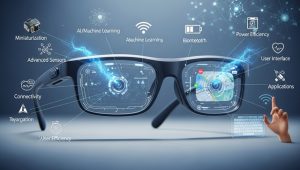

Multimodal AI Integration: Future glasses will act as “AI companions,” using cameras and microphones to see and hear what you do. They will provide real-time translation, identify objects, and offer proactive assistance (e.g., reminding you of a name as someone approaches).
Advanced Displays & Optics: Heavy headsets are being replaced by sleek frames using MicroLED and waveguide technology, offering bright, transparent displays that look like standard eyewear.
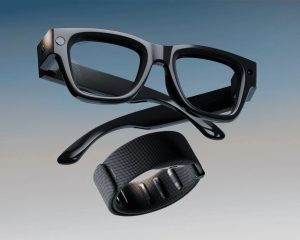
Novel Approaches to Interaction: Beyond voice commands, “neural interface” wristbands (such as Meta’s EMG band) and gesture-tracking rings—which let you manipulate the interface with minute finger movements—are part of the future.
Health & Specialized Monitoring: Beyond consumer use, glasses with sensors to monitor blood oxygen, heart rate, and even mental health are being developed.
Expected Major Launches (2025–2027)
Best Smart Glasses Companies in 2026
Leaders in the industry are engaged in a “10-year race” to perfect the form factor:
Meta: Already leads with Ray-Ban Meta glasses; third-generation models with integrated displays and the high-end “Orion” AR glasses are in development.
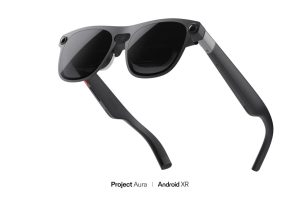
Google: Partnering with brands like Warby Parker to launch a new line of smart glasses running Android XR in 2026.

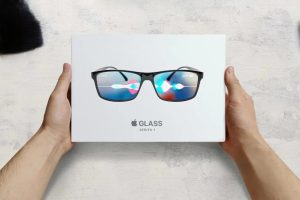
Apple: Reportedly “hell-bent” on a lightweight AR product, with a launch anticipated between late 2026 and 2027.

Samsung: Developing its own Android XR-powered hardware in collaboration with Google and Qualcomm.
Core Challenges.