

The emergence of fashion technology has led to the rise of “fashion tech experts,” who theorize that this trend might eventually create a separate industry within the fashion industry. It is unclear, though, if this result is realistic.
What is Fashion Technology?

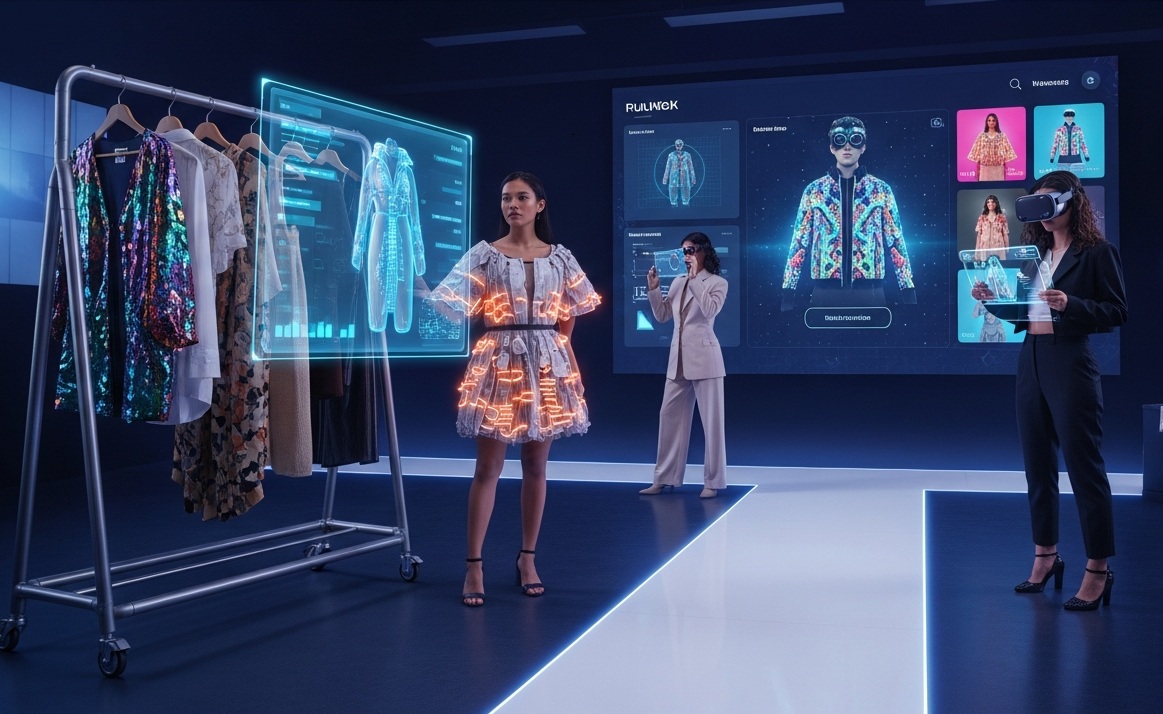
The term “fashion technology” refers to the integration of technological innovations into the production and marketing of fashion items. Applications for this idea are numerous in the fashion industry, encompassing the processes of sourcing, production, design, and retail. To reduce waste and promote sustainable practices, digital technology is also used in fashion. Leading international fashion brands are offering virtual products on Web3 and metaverse platforms in addition to tangible fashion items.
New Developments in Technology for 2025
Cutting-edge technologies are driving revolutionary changes in the fashion industry as we approach 2025. Fashion is changing due to trends like the combination of AI and human touch, smart wearable technology, and creative inventory management systems. Here are three crucial areas to keep an eye on.
1. The Human Touch and AI’s Rise
The fashion industry is quickly adopting artificial intelligence (AI) as a key component, which allows companies to provide highly customized experiences, streamline production, and enhance supply chain management. But as 2025 draws nearer, more attention is being paid to combining human creativity with AI’s efficiency. With AI managing data analysis and pattern recognition and human designers concentrating on creative intuition and storytelling, this synergy promises to produce more emotionally impactful design and consumer experiences.
AI is being adopted by fashion brands for its capacity to improve the human element of fashion as well as its capacity to forecast trends and optimize workflows. AI-driven design tools are facilitating greater consumer interaction through virtual assistants and tailored shopping experiences, while also assisting designers in experimenting with materials, shapes, and textures.
2. The Next Big Thing: Smart Glasses
With their smooth transition between the digital and real worlds, smart glasses are predicted to be the next big wearable technology in fashion. By 2025, tech firms and fashion labels are working together to create fashionable, useful smart eyewear that does more than augmented reality (AR). With the help of these glasses, customers will be able to engage with virtual fashion collections, get real-time product recommendations, and even try on virtual clothing in a completely immersive setting.
In addition to their retail applications, smart glasses are increasing consumer interaction in the metaverse and providing a new platform for digital self-expression. For tech-savvy consumers, these gadgets may become a must-have fashion accessory as they get more fashionable and comfortable.
3. Waste Prevention Using Inventory Management Systems
In 2025, more intelligent inventory management will be closely linked to sustainable fashion. Fashion companies are spending money on advanced systems that use blockchain, AI, and machine learning to better forecast demand and prevent overproduction. Fashion businesses can now cut waste, minimize unsold inventory, and match production schedules to current market demands thanks to these innovations.
Brands can drastically lessen their environmental impact while simultaneously increasing their profitability by streamlining inventory tracking and management. Companies can now precisely meet customer demand thanks to this shift to data-driven operations, which also helps the fashion industry become more circular and sustainable.
Let’s take a closer look at what fashion technology is and how each department of the fashion industry can utilize it.
Fashion Retail Experience With Innovation
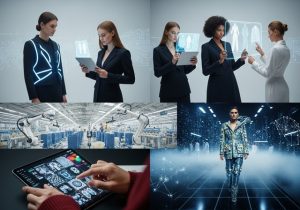
AR/VR
In recent years, the fashion industry has increasingly adopted modern augmented reality (AR) and virtual reality (VR) technologies. These tools have been extremely helpful in enabling customers to try on clothes virtually. These technologies enhance customers’ shopping experiences by enabling precise measurements and customization. Purchase rates and general customer satisfaction may rise as a result.
Chatbots and Digital Stylists:
As artificial intelligence (AI) gains popularity, the retail industry is seeing a boom in the use of chatbots and digital stylists. Customers receive a highly customized experience from these AI-powered assistants, which enhances their overall shopping experience. Examples of how chatbots can improve visual search and recommendation systems include allowing users to upload images of the products they want, which can then be used to suggest related products.
Cutting-Edge Design Strategies:
Co-creative methods that rely heavily on cutting-edge technology are part of the novel design methodology. Designers are now able to produce designs and products that were previously impossible to achieve through traditional methods thanks to the use of innovative materials and cutting-edge technology. Designers can now more efficiently combine materials, colors, and patterns to accommodate their clients’ preferences thanks to artificial intelligence.
Three-dimensional (3D) Virtual Sampling:
Physical samples used to be essential for every step of the product development, acquisition, and sale processes. Prior to final production, designers and retail buying teams had to produce a large number of physical samples for every iteration—sometimes as many as 20.
The waste generated by numerous physical samples is significantly reduced by virtual sampling, which is made possible by the development of 3D technology and enables a completely digitalized design review procedure. Tommy Hilfiger has embraced 3D sampling and announced that by 2021, all upcoming design work will be done entirely in 3D. Moreover, creating physical samples requires less money and effort.
Fashion Technology in Manufacturing
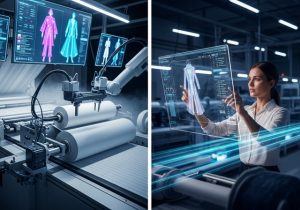
Examinations of Consumer and Market Trends
The idea of customization and forecasting is central to the future of fashion. Fashion companies can use computers to analyze collected data and make accurate predictions about future trends.
Technology has made it possible for fashion companies of all sizes and markets to better understand their clientele. Fashion businesses can transform their approach to product development and creation by utilizing the growing data collection efforts.
Traditional trend prediction techniques will be complemented by artificial intelligence, which will be essential in forecasting future customer preferences. Clothing designers can also profit from this data-driven approach by producing items that meet the changing demands of the market.
Using 3D Printers:
3D printing has become a promising tool in the on-demand fashion industry. It makes it possible to create customized goods, which lessens the need for mass production and cuts down on waste.
On-demand fashion is streamlined by integrating fashion technology, like augmented reality, which allows customers to view product images before placing an order. By using 3D printing for on-demand fashion, the fashion industry can move closer to a sustainable, personalized, and efficient future.
Fashion Technology Improves Sustainability
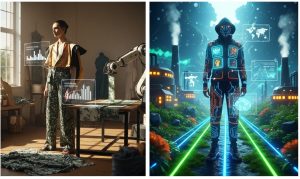

Market Restructuring by Conscientious Consumers
Customers’ demand for sustainable fashion has clearly increased as societal awareness of climate change continues to rise, leading brands to respond by creating more sustainable products. As evidenced by the Global Fashion Agenda and Boston Consulting Group’s 2020 report on the Pulse of the Fashion Industry, the proportion of consumers actively purchasing sustainable fashion increased from 21% in 2019 to 27% in 2020.
Customers who value sustainability appreciate fashion that highlights environmentally friendly materials and open, ethical labor practices. Concern about the environmental impact of purchases has grown, as evidenced by the 70% increase in the number of people looking for eco-friendly products online over the last five years.
Using cutting-edge technologies that seek to address fundamental problems, the fashion industry is tackling sustainability challenges. Companies can create a sustainable future for their clients by adopting these technologies, which will improve fit and sizing, increase personalization, and encourage reuse.
Decreased Physical Waste
Up to 80% of clothing is either burned or landfilled, according to the Global Fashion Agenda. Due to the convenience, free delivery and return shipping are the two main features that encourage consumers to buy online. Customers therefore frequently purchase a range of sizes and return any that do not fit.
The effects of not having size-selecting instructions can be mitigated by body scanning. For retailers, it might be one of the most important e-commerce conversion tricks. Companies may use the information from these scans to create clothing that fits a range of body shapes rather than relying on a proportional scale. This would boost customer confidence that the items they purchase will fit them, thereby boosting brand and merchant loyalty.
Fashion Technology in Online Media:
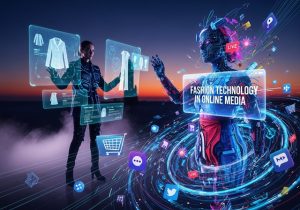
Fashion and Social Media Technology Use
Fashion technology and social media are more than just a way to interact with customers and display products. For fashion brands, both domains have grown to be significant data sources.
Fashion brands can gather important data about their clientele, including demographics, preferences, and behaviors, by using social media platforms. By using this information, marketing campaigns can be more accurately targeted, customized products can be made, and the general customer experience can be enhanced. Similar to this, fashion technology, like wearables and smart apparel, can gather information about consumers’ daily routines, physical activity, and health. Product development and functionality can be enhanced with the help of this data.
To guarantee the ethical use of this data, fashion brands must, however, prioritize data privacy and be open and honest about their data collection procedures.
In Conclusion
Fashion technology is without a doubt a very promising development in several fields, including education, business, and investment, and it is crucial for the upcoming generation of consumers.
Every facet of the fashion industry is continuously changing due to fashion technology. It is not anticipated to replace the fashion industry as it exists today, but its growth trajectory suggests that it has the potential to completely transform it in the years to come.